Which AI calorie tracker should you choose?
There is no single best AI calorie tracker; it depends on how you log. Cal AI is built for photo-first logging, on a subscription. MyFitnessPal and Lose It! add paid photo logging to large diaries. SnapCalorie keeps its core features free. Whichever you pick, a photo alone tends to under-count.
| App | Best for | AI photo logging on the free tier | Paid price (USD) | NIH photo-only result (mean kcal under-counted per meal) | Main limit |
|---|---|---|---|---|---|
| Cal AI | Photo-first logging with little setup | No: scan results need a subscription; 3-day trial | In-app purchases from $2.99 to $29.99 | 345 | Cannot see oil, butter or hidden ingredients |
| MyFitnessPal (Meal Scan) | People who already keep their diary in MyFitnessPal | No: Meal Scan, Voice Log and barcode scan are Premium; 7-day trial | $9.99 to $19.99 a month or $49.99 to $79.99 a year | 327 | Matches you still review against a large, partly user-entered database |
| Lose It! (Snap It) | A simple diary with photo, voice and barcode on the paid plan | No: photo, voice and barcode are Premium | In-app purchases from $9.99 to $79.99, including lifetime options at $49.99 and $59.99 | 333 | Manual search for everything the photo misses |
| YAZIO | A free barcode diary with an AI tracker on top | Not stated by the publisher; check in the app | PRO from $23.90 to $47.90 a year | Not assessed | User-entered foods and portions vary in quality |
| SnapCalorie | Trying photo logging without paying | Yes: core features free, no card | Premium in-app purchases from $9.99 to $149.00 | Not assessed | Its accuracy figure comes from its own research |
| IZeat | ChatGPT or Claude users who want meal ideas that fit what is left | No camera of its own: your assistant reads the photo and asks questions first | 7-day free trial, no card; then €14.99 a month or €74.99 a year (launch price; full price €19.99 and €99.99) | Not assessed | Needs a compatible assistant, paid separately; no scanner or food database of its own |
Sources: each app’s US App Store listing and official site, checked 6 October 2026; NIH figures from Healio’s report of the July 2026 conference presentation, preliminary and not peer-reviewed. Prices change and vary by country; the date is the guarantee.
I used MyFitnessPal, Lose It!, Cal AI and YAZIO myself; my notes on each are below. SnapCalorie and the prices were read on each publisher’s own pages. IZeat publishes this page and sells one of the six options, so its section says what it does not do as plainly as the others. Nothing here is ranked by weight lost: a tracker records food, and none of these comparisons measured body results.
How accurate are AI calorie trackers from a photo?
Photo-only AI calorie trackers under-count. Researchers at the US National Institute of Diabetes and Digestive and Kidney Diseases (NIH) prepared 102 meals in a metabolic kitchen, weighing every ingredient, then compared four apps’ estimates from photos with the known values. All four came in low on average, and all four missed about 30 g of fat per meal. The results were presented at NUTRITION 2026, the American Society for Nutrition’s meeting (25 to 28 July 2026), and remain preliminary until the full study is peer-reviewed (Healio, 4 August 2026).
| App | Mean energy under-counted (kcal per meal) | Fat under-counted (g per meal) |
|---|---|---|
| Appediet | 252 | About 30 |
| MyFitnessPal | 327 | About 30 |
| Lose It! | 333 | About 30 |
| Cal AI | 345 | About 30 |
Source: Hengist and colleagues, NIDDK/NIH, presented July 2026, reported by Healio and HealthDay via MedicineNet. Not yet peer-reviewed. Follow-up data on more than 200 further meals suggest a larger miss on higher-fat, lower-carbohydrate meals.
The lead researcher’s advice, as quoted by HealthDay: people using a photo app without adjusting portions or entering amounts should take the results with a grain of salt. The pattern fits what a camera cannot see: oil in the pan, butter melted into rice, a sauce under the meat, cheese inside an omelette.
General AI models behave the same way from a photo, and get better with words. A 2025 study gave ChatGPT-4o, Claude 3.5 Sonnet and Gemini 1.5 Pro 52 standardised food photos: ChatGPT and Claude missed energy by about 36% on average, Gemini by far more, and all three under-estimated more as portions grew (Current Developments in Nutrition, 2025). A study of ChatGPT-5 on 195 dishes found the error fell when the photo came with a short description, and fell again with an ingredient list and amounts (Nutrients, November 2025). These studies measured the models, not any app in this list, IZeat included.
For comparison, Cal AI’s own site describes its estimates as about 80% accurate, and SnapCalorie says its computer vision is twice as accurate as nutritionists, citing its Nutrition5k research from 2021. Those are the publishers’ figures, not an independent measurement. More on what a picture can and cannot establish: can an AI count calories from a photo?
Is Cal AI worth paying for?
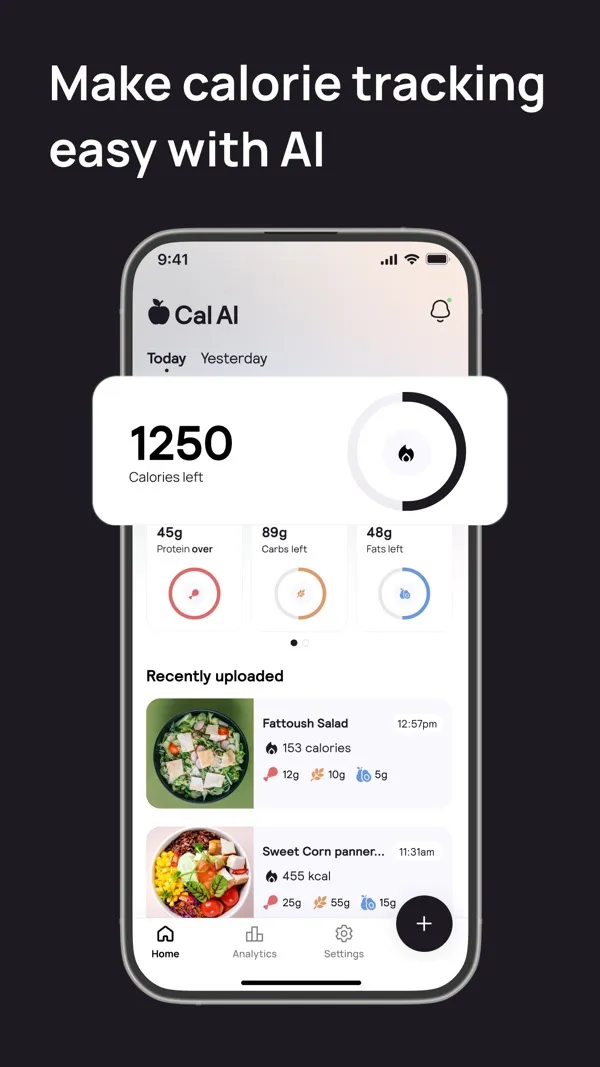
Cal AI suits people who want a short path from plate to number and accept an approximate result. You photograph the meal, its depth sensor estimates the volume, and it returns calories and macros; it also takes a barcode or a typed description, and lets you adjust the macros (calai.app, checked 6 October 2026).
Free or paid: the download is free, but its App Store listing states that food scanning results require a subscription. The site offers a 3-day free trial. In-app purchases range from $2.99 to $29.99 (US App Store, 6 October 2026), rated 4.8 from about 369,000 ratings.
Ownership: MyFitnessPal announced on 2 March 2026 that it had acquired Cal AI and would keep it running as a standalone product (Athletech News, Fitt Insider). The two apps still sell separate subscriptions.
My limit with it: far too approximate. It had no idea of the macros of the ingredients, nor whether I had used oil or anything else. In the NIH comparison it had the largest average miss of the four apps, 345 kcal per meal.
Is MyFitnessPal Meal Scan worth Premium?
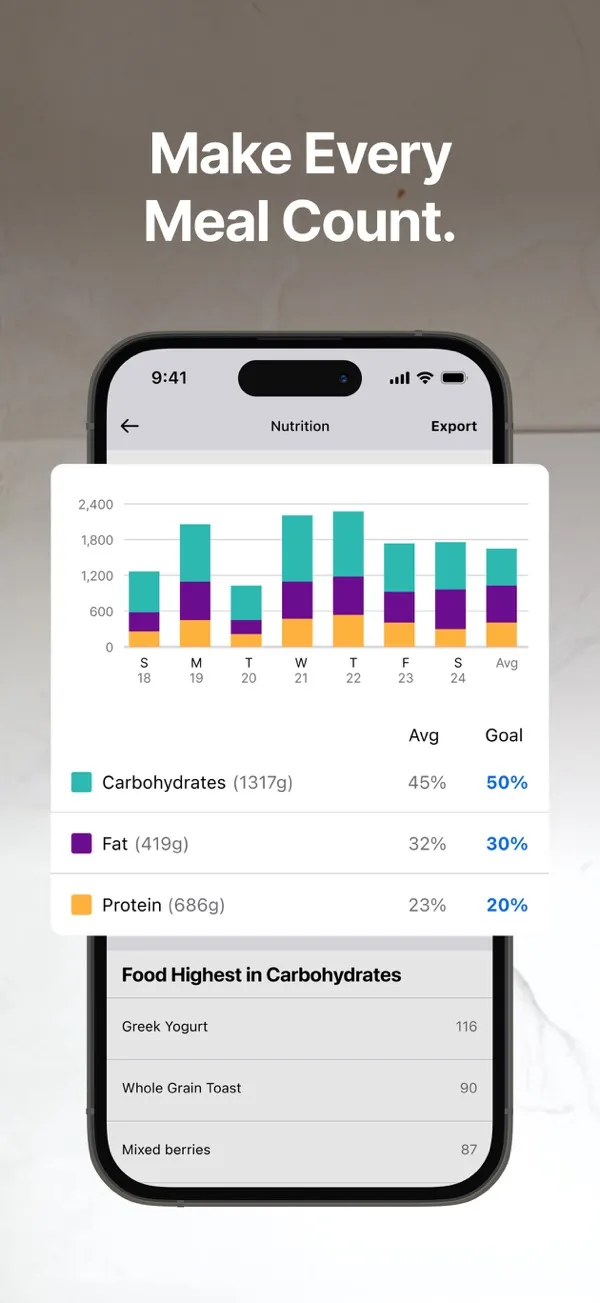
MyFitnessPal Meal Scan suits people whose diary, recipes and history already live in MyFitnessPal and who want a faster way in. Meal Scan suggests foods from a photo; you pick the right matches and change servings before logging. Premium also adds Voice Log and barcode scanning (myfitnesspal.com/premium, checked 6 October 2026).
Free or paid: Meal Scan, Voice Log and barcode scan are Premium features, with a 7-day trial for first-time subscribers. The US App Store listing shows Premium at $9.99 to $19.99 a month or $49.99 to $79.99 a year (6 October 2026). It has the most ratings of any app here: 2.4 million, averaging 4.7.
My limit with it: searching the food database by hand for every item took far too long. Meal Scan is MyFitnessPal’s answer to that, but it still hands you matches to check, and in the NIH comparison its photo estimates averaged 327 kcal under the real meal.
Is Lose It! Snap It a good AI calorie tracker?
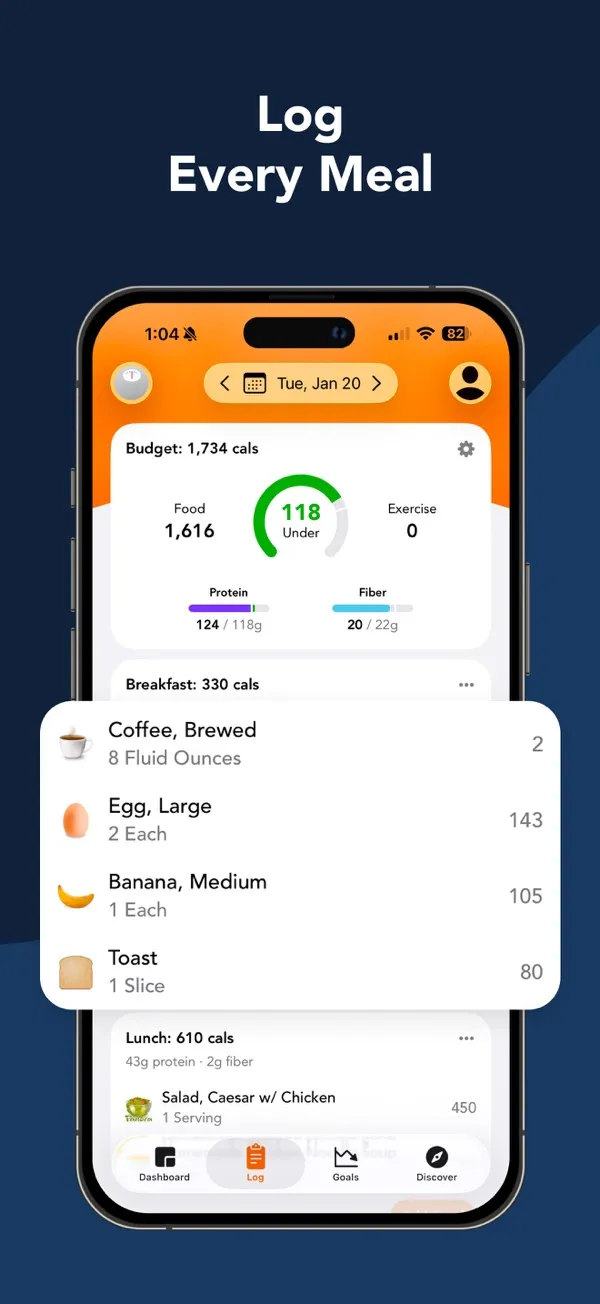
Lose It! suits people who want a straightforward calorie diary with photo, voice and barcode entry in one paid plan. Its listing describes logging a meal by taking a picture, an AI voice option and a barcode scanner, all three marked as Premium (US App Store, checked 6 October 2026).
Free or paid: the free diary works with manual search. In-app purchases range from $9.99 to $79.99, with lifetime options listed at $49.99 and $59.99 (US App Store, 6 October 2026). Lose It! does not state on its listing how many photo logs, if any, a free account gets. Rated 4.8 from about 780,000 ratings.
My limit with it: the same as MyFitnessPal. Searching the database by hand for every item took far too long. In the NIH comparison, Lose It!’s photo estimates averaged 333 kcal under.
Is YAZIO’s AI calorie tracker any good?
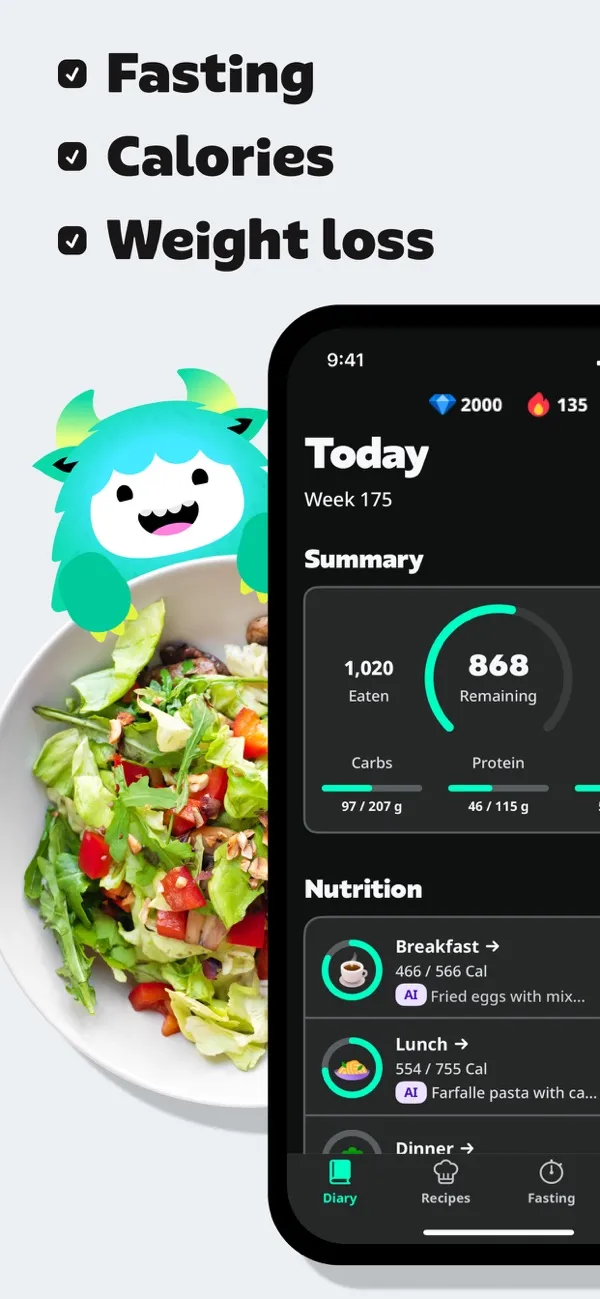
YAZIO suits people who want a free diary with a barcode scanner and a large food list, and who may try AI logging on top. Its App Store listing, now titled “AI Calorie Tracker by Yazio”, describes logging by photo, by saying what you ate or by typing a short text, plus a free barcode scanner and more than 4 million foods (US App Store, checked 6 October 2026).
Free or paid: PRO costs $23.90 to $47.90 a year, $23.99 for three months or $34.99 for six (US App Store, 6 October 2026). The listing does not say plainly whether photo logging is free or PRO, and third-party reviews report that it is PRO only; check inside the app before counting on it. Rated 4.7 from about 51,000 ratings. YAZIO was not part of the NIH comparison.
My limit with it: food entries added by other users were unreliable, portions were badly estimated, and exercise calories were over-counted.
Is SnapCalorie really free?
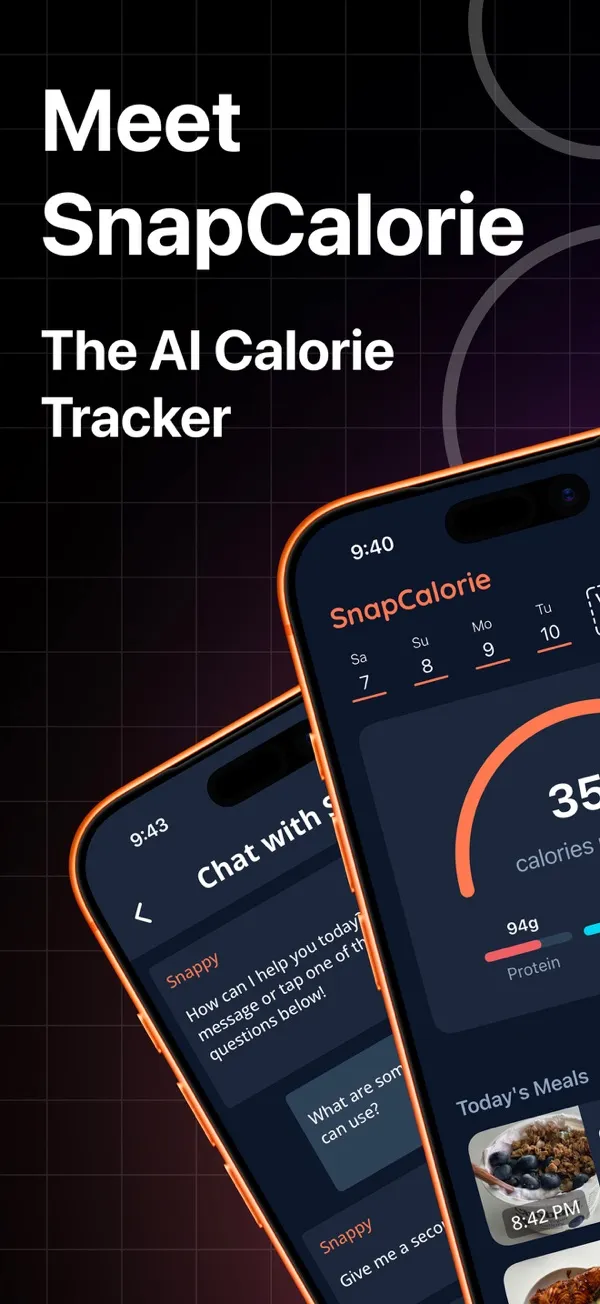
SnapCalorie suits people who want to try photo logging without paying first. Its site calls the core features free forever, with no credit card (snapcalorie.com, checked 6 October 2026). It logs from a photo or a voice note; its App Store listing adds barcode scanning and LiDAR portion measurement on iPhone Pro models.
Free or paid: core features free; the US App Store listing shows premium in-app purchases from $9.99 to $149.00 (6 October 2026). The publisher’s pages do not state a daily scan limit for free accounts, so check it in the app. Rated 4.7 from about 6,700 ratings.
Limit: its “twice as accurate as nutritionists” claim rests on its own research, and it was not part of the NIH comparison. I have not used it; everything here comes from the publisher’s pages.
Can you log calories by talking to ChatGPT or Claude?
Yes, with a tracker that connects to the assistant. IZeat is the five-star chef calorie tracker that suggests satisfying, great-tasting meals, so you enjoy every calorie you have left. It works inside ChatGPT, Claude or any other assistant: IZeat knows your numbers for the day, which foods fill you up and what you like.
IZeat suits people who already use ChatGPT or Claude and gave up on a tracker because logging took too long. You say the meal in one sentence; the assistant follows IZeat’s logging rules, stores it, and replies with the meal’s macros and what is left of your day. Then you can ask what to eat next, and the assistant suggests a filling meal that fits the remainder and what you have in the fridge. A suggestion is not logged until you say what you actually ate.
“I had 180 g of grilled chicken, 150 g of cooked rice with a teaspoon of olive oil, and a plain yoghurt.”
For a plate photo, the assistant is instructed to ask about the portion, the cooking method, the fat and the sauces before it estimates, and the figure is stored as an estimate. Every item carries its source: a label, your own value, a reference or a marked estimate. That is the photo-plus-words approach the studies above found more accurate for AI models in general; it is not a measured accuracy figure for IZeat, which has none.
Free or paid: a 7-day free trial without a card, then €14.99 a month or €74.99 a year (launch price; full price €19.99 and €99.99); see the current price. Your ChatGPT or Claude plan is separate, and the client must support remote connectors on your account: check the connection before starting.
Limits: IZeat has no camera, barcode scanner or food database of its own; the assistant reads photos and labels. The logging rules guide the model but cannot guarantee it follows them every time. In my own use, logging this way felt about ten times faster than my old tracker; that is my observation, not a timed average. If you want a gram-precise diary with barcode scanning built in, a dedicated app such as Cronometer fits better: see the macro tracking app comparison.
How do you get a better estimate from any AI calorie tracker?
Give the AI what the camera cannot see. The NIH results and the model studies point the same way: most of the miss is fat, hidden ingredients and portion size.
- State the portion: a weight from the scale or the package, or a count such as two eggs.
- Name the cooking method and the fat: grilled, fried, roasted, and how much oil or butter went in. Cooking fat is the item most often left out.
- Add sauces, dressings and drinks as separate items.
- For packaged food, photograph the nutrition label or scan the barcode rather than the plate, and check the values read back.
- Open the saved entry and correct any item that is wrong; you then see the corrected day total.
None of this needs a specific app. It works in Cal AI’s description box, in MyFitnessPal’s serving editor, in YAZIO’s text prompt and in a conversation with an assistant. For choosing on accuracy rather than speed, see how to choose an accurate calorie counter.
How were these AI calorie trackers compared?
The five apps are the ones that come up most across the pages and videos ranking for “best AI calorie tracker” in October 2026; IZeat, which publishes this page, is shown apart and not counted among them. I used MyFitnessPal, Lose It!, Cal AI and YAZIO myself; the notes marked as mine come from that use, not from a controlled measurement. Prices, free limits and features were read on each publisher’s US App Store listing and official site on 6 October 2026. Accuracy figures come from the published research cited above, not from a measurement of our own.
Cronometer also offers photo and voice logging, as part of its Gold plan at $10.99 a month or $59.99 a year (cronometer.com/gold, 6 October 2026). It is covered with other gram-focused diaries in the macro tracking app comparison rather than here.
Frequently asked questions
Short answers to the questions people type, each one sourced above.
Is the AI calorie tracker really free?
Usually not for the AI part. Cal AI needs a subscription to show scan results, after a 3-day trial. MyFitnessPal and Lose It! put photo, voice and barcode logging behind Premium. YAZIO’s listing does not say plainly whether photo logging is free. SnapCalorie is the exception here: its core features are free with no card. Checked on each publisher’s page on 6 October 2026.
What is the #1 calorie tracking app?
There is no independent #1. By size, MyFitnessPal has the most App Store ratings of the apps compared here, 2.4 million at 4.7 in the US store on 6 October 2026, and it now owns Cal AI. Popularity is not accuracy, though: in the NIH comparison its photo estimates averaged 327 kcal under. Pick by how you log and what you will pay.
What is the best most accurate calorie tracker?
No independent study ranks all AI calorie trackers on accuracy. In the one comparison of named apps, from NIH researchers in July 2026 and not yet peer-reviewed, all four photo apps under-counted, by 252 to 345 kcal per meal on average. The most accurate figures come from weights and labels, whatever the app. Adding portions, cooking fat and sauces to a photo reduces AI error in published studies.
What's better, MyFitnessPal or Cal AI?
They now belong to the same company: MyFitnessPal announced it had acquired Cal AI on 2 March 2026, and Cal AI runs as a standalone app. Cal AI is built around photo-first logging; MyFitnessPal is a fuller diary with a large database, Meal Scan, voice and barcode on Premium. In the NIH comparison their photo estimates averaged 345 and 327 kcal under respectively.
Do AI calorie trackers work?
They work as a fast first draft, not as a measurement. A photo identifies the food well enough to start an entry, but the NIH comparison found photo-only estimates under-counted by roughly a third of the meal’s energy, mostly fat. They become far more useful when you add the portion, the cooking fat and the sauces, and correct the entry before saving it.